

The Cambridge Institute for Sustainability Leadership (CISL) kicked off the academic year's leadership training with a day that was equal parts profound and playful.
On Friday, December 12th, the Mastercard Foundation Scholars gathered for the first module of their bespoke leadership training programme and what a day it was. Designed to help scholars reflect on and develop their leadership skills while expanding their influence and impact within their chosen fields, the programme delivered on its promise with a packed agenda that was anything but boring.
Unpacking Power: From Global to Personal
The day opened with Dr. Louise Drake leading a vigorous discussion on African leadership that got scholars thinking critically about power, agency, and purpose. What does good leadership look like in practice? The room buzzed with examples and insights as scholars drew from their own experiences and observations.
The key revelation? Understanding power isn't about domination, it's a strategic tool. By identifying key actors, systems, and spaces that shape what's possible, leaders can better analyse challenges and chart pathways forward.
Catherine Angai from the Institute of Development Studies then brought this exploration of power down to the personal level. Through the ASK framework (Actors, Spaces, and Knowledge), scholars were guided to reflect on their own sources of influence and purpose.
Communication Styles and Active Listening
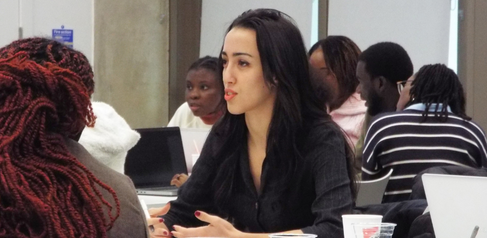
Understanding your communication style is one thing; seeing it in action is another entirely. The scholars dove into interactive exercises that revealed how they naturally communicate, persuade, and connect with others. Some discovered they're natural storytellers, while others recognised their strength in data-driven arguments or emotional resonance.
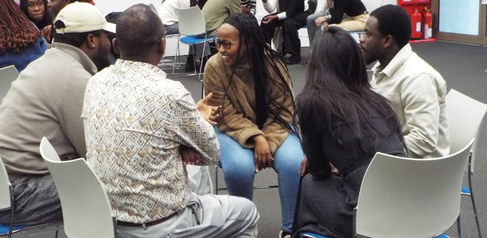
Anne Owen, an executive leadership coach, then introduced scholars to the art of active listening through a beautifully simple yet powerful exercise. In small groups, scholars rotated through three roles: speaker, listener, and observer. The task was to share the highs and lows of their Cambridge experience, but the magic happened in the reflection afterward. What did it feel like to truly listen without planning your response? What patterns emerged when you stepped back as an observer?
This exercise wasn't just about listening, it was a preview of the upcoming peer coaching module and a reminder that great leaders create space for others to be heard.
Communicating for Influence
And then came the seriously energetic session everyone's still talking about.
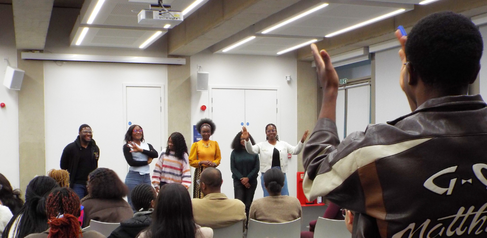
Caroline Rippin from the Møller Institute brought the house down with 'Communication for Influence'; a whirlwind of activities that had scholars thinking on their feet (literally). Picture rapid-fire role-plays, a vulnerability-building game that resembled musical chairs, and mock presentations to imaginary donors and future scholars.
Scholars tested their listening skills, practiced their pitches, and discovered that stumbling through a presentation is part of the learning curve. The energy in the room was electric. Nervous laughter gave way to confident delivery. Feedback flowed generously. And everyone left with concrete strategies to communicate more persuasively and authentically.
Why This Matters
The first module special was the blend of rigorous reflection and joyful interaction. Leadership development doesn't have to be a solemn, serious affair. Sometimes the most profound insights come when you're laughing, moving, and connecting with peers who share your commitment to making the world better.
As scholars wrapped up the day, tired but energised, notebooks full and minds buzzing; they carried away more than just new concepts. They gained a deeper understanding of their own power and influence, practical tools for communication and listening, and stronger connections with their cohort.