

South Sudan, despite being richly endowed with fertile land and vast natural resources, continues to face acute food insecurity. The Integrated Food Security Phase Classification report 2024 anticipated the situation to deteriorate further, particularly in regions affected by persistent conflicts and climate shocks.
The dual threat: conflict and climate change
In regions affected by conflict, market disruptions, population displacement, and damage to infrastructure, including roads and storage facilities, severely constrain access to and availability of food.
In tandem with insecurity, climate change is becoming an increasingly destabilising force. Seasonal floods along the Sudd region and across the flat plains of South Sudan are destroying farms and homes. Recently, severe heatwaves forcing school closures and posing health risks have added another layer of complexity to the already fragile environment.
Economic instability further exacerbates the crisis. Skyrocketing inflation and erratic commodity prices have significantly reduced household purchasing power, making it increasingly difficult for ordinary citizens to afford basic necessities.
Short-term relief, but what about long-term solutions?
In response to these compounding challenges, humanitarian partners have provided food aid, nutrition support, and agricultural inputs to meet immediate needs. Meanwhile, the government has begun supporting domestic food production by procuring tractors. However, a more integrated, systems-based approach is required to tackle the root causes of food insecurity and build long-term resilience.
Local innovation offers a glimmer of hope
Encouragingly, some development actors have taken the lead in promoting climate-smart agriculture. In parts of Upper Nile for example, innovative practices such as floating vegetable gardens have emerged in response to recurrent flooding. These adaptive strategies are steps in the right direction. Yet despite such progress, the food security situation in South Sudan remains alarming. This raises a critical question: What is the missing link? What must we do differently to turn the tide?
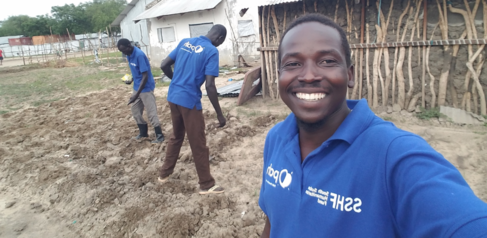
Planting vegetable seeds in a demonstration garden in Akobo West, South Sudan
Empowering smallholders for a sustainable future
Engaging and investing in smallholder farmers to enable them to transition towards more commercial, climate-resilient, and sustainable agricultural practices must be central to any sustainable strategy. Many farmers across South Sudan and Sub-Saharan Africa are passionate and hardworking, yet they remain constrained by limited access to inputs, markets, and knowledge. And without access to quality seeds, tools, irrigation, and climate-smart training, their capacity to improve production and contribute meaningfully to national food security remains limited, particularly in the face of increasingly harsh climatic conditions.
A story of resilience amid hardship
My work in the field has brought these challenges into sharp focus. While responding to emergency food insecurity in Akobo County, Jonglei State, with Polish Humanitarian Action (PAH) as a Food Security and Livelihood Officer, I encountered a compelling example that has remained with me. Gia Reath Malow, a smallholder farmer in a remote village of Walgak, in Akobo West, exemplifies both the resilience and the constraints experienced by many farmers across South Sudan and Sub-Saharan Africa.
Walgak is geographically isolated, accessible only by light aircraft or humanitarian helicopters during the rainy season. Even in the dry season, poor road conditions and insecurity restrict movement and trade. Yet Gia Reath makes use of every opportunity. During the dry season, he cultivates vegetables near a shared water source. Using thorn tree branches to fence off his small plot, he waters his crops each morning and evening. His wife sells the harvested vegetables in the local market, including to humanitarian workers. This modest income supports their family’s basic needs.
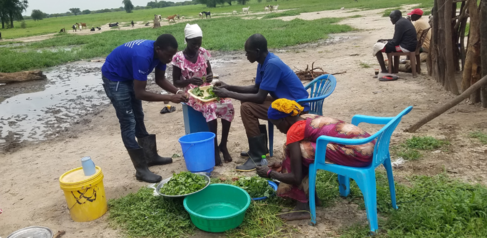
Teaching at a nutrition centre in Akobo West, South Sudan
Despite his determination, Gia Reath faces overwhelming barriers. He cannot afford seeds, tools, or fertilisers, especially given the high cost of air transport. During periods of drought, he competes with livestock for water, and when floods arrive, his fields are often submerged. His story is not unique. It mirrors the lives of countless smallholder farmers who remain at the margins of food systems, yet hold the potential to be its backbone.
If South Sudan is to achieve sustainable food security, then targeted investment in agricultural inputs, climate-smart training, and rural infrastructure is not just necessary, it is urgent. This must be matched with efforts to promote peace and stabilise the economy, thereby enabling farmers to thrive and food systems to function.
Finding my purpose
As an agriculturalist with first-hand experience working alongside smallholder farmers in Africa, I have been deeply challenged by the persistent barriers they face, ranging from limited access to inputs to the growing impacts of climate change. This personal and professional commitment to finding practical, lasting solutions led me to the University of Cambridge, where I pursued an MPhil in Biological Sciences (Crop Science).
This opportunity has allowed me to engage with world-class research and innovation, equipping me with the scientific tools and global networks needed to translate cutting-edge knowledge into locally relevant, impactful interventions for the farmers who need them the most.
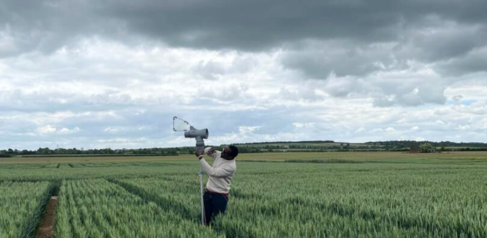
Using a surveillance system to track and understand disease spread at Duxford NIAB trial grounds during my master's
Bridging research and reality: Delivering innovation to those who need it most
During my studies, I had the opportunity to engage with various research teams, attend seminars, and present at a departmental poster symposium. These experiences exposed me to groundbreaking agricultural research with the potential to transform farming systems globally.
A moment of clarity came during the departmental poster symposium. As I walked through the displays, I felt both inspired and burdened. A question echoed in my mind: How will smallholder farmers in remote African villages, like Gia Reath in Akobo West (Walgak), ever access the benefits of this research?
In that moment, I was reminded of my purpose. It reaffirmed why I am here; to be a bridge between innovation and impact, between cutting-edge science and the real needs of the farmers facing food insecurity on the front lines. I smiled, grateful for the Mastercard Foundation Scholars Program that enabled this journey. This was more than a study opportunity; it was a call to action.